


In September 2025, LayerX raised JPY15 billion in its Series B round, led by TCV, a global growth equity firm known for investments in renowned companies like Netflix, Spotify, ByteDance. This marked TCV‘s first investment in a Japanese startup. We spoke with Yoshinori Fukushima (CEO of LayerX) and Mike Kalfayan (General Partner at TCV) to understand the back story to this investment.
First meeting to term sheet
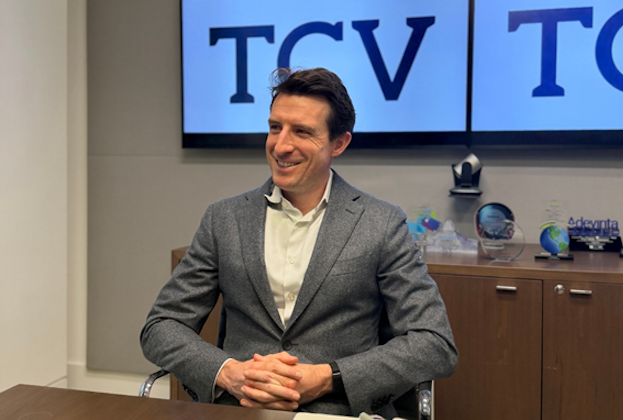
TCV is a global growth equity firm founded in 1995, with a proven track record of supporting the growth phases of global technology companies like Netflix, Spotify, and Airbnb. We learned about the process leading up from from TCV’s initial meeting with LayerX to the investment decision.
——Many readers in Japan may not yet be familiar with the name TCV. Could you first tell us what kind of firm TCV is and what investment philosophy it holds?
Michael (Kalfayan): TCV is an investment firm that invests in growth companies worldwide and seeks to support their business expansion. With offices in Menlo Park (California), New York, and London, we aim to make investments that drive long-term growth for companies in the technology and innovation sectors.
Over our 30-year history, we‘ve invested in over 350 technology companies, more than 80 of which have IPOed.
Our goal is to invest in high-quality companies worldwide. Over the past 30 years, we‘ve partnered with many growth-tech companies like Netflix, Spotify, Revolut, Nubank, Toast, ByteDance, Airbnb, and Splunk. We tend to have a relatively concentrated portfolio, focusing on opportunities where we believe we can deliver significant value to our portfolio companies.
——I‘d like to ask about your initial connection—how did TCV and LayerX first meet?
Fukushima: Our initial connection was through Takashi “Taka” Sano at MUFG Innovation Partners, who introduced us to Alex Wortmann at TCV. While global investors were coming to Japan quite a bit around 2021 to 2022, and we had connections from that time, we hadn‘t specifically connected with TCV. We had planned for a round of over JPY10 billion, but it wasn’t a predetermined choice. We felt we should consider overseas investors in parallel with corporate investors and domestic VCs, so we were in discussions with several parties.
It was around the fall of 2024, just as we were starting to consider fundraising, when we were introduced to TCV.
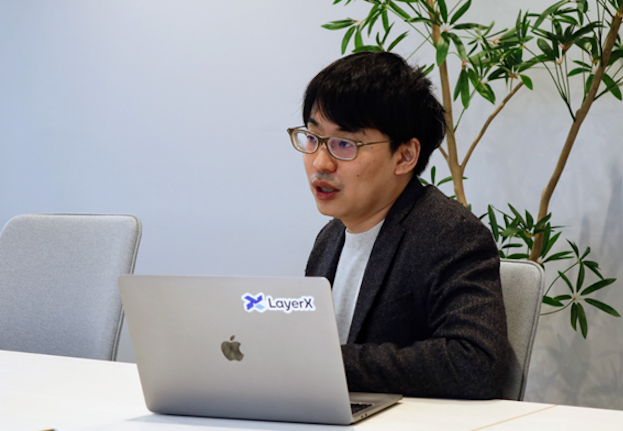
——Michael, I’d like to ask you, this marks TCV’s first investment in a Japanese startup. Why did TCV, which has invested in global companies like Netflix and Spotify, choose LayerX?
Michael: As a global investor, we focus on high-quality businesses and are always seeking the most high-caliber companies. Japan is the world’s fourth-largest economy, so naturally, we’ve spent considerable time researching opportunities that could meet our investment criteria. Regarding LayerX, we were drawn to several differentiating characteristics.
First, the large and largely untapped market opportunity for automating accounting and finance operations in Japan. This segment is an area TCV has focused on for many years, having invested in related companies like Xero, Brex and Revolut. We’ve conducted extensive research on this entire category and believe we possess considerable expertise.
We were also impressed by LayerX’s track record of product innovation over the past few years. They have successfully launched multiple new products, and we were particularly impressed by their implementation of AI and machine learning within their platform – and their highly compelling long-term AI vision.
Another key factor is LayerX’s team. Fukushima has founded two companies, which is extremely rare in Japan’s ecosystem. What particularly impressed us during our due diligence was how he has built a strong organization that combines a team driving business growth with a team generating innovative technology. Fukushima and Matsumoto have highly reputable AI/ML backgrounds and are laser-focused on applying AI to transform the Japanese economy over the coming years.
——I’d also like to ask from LayerX’s perspective, what was the reason for choosing TCV among multiple potential investors?
Fukushima: One key factor was the level of commitment. After the introduction, we had a meeting around year-end. During that meeting, Mike asked, “Is it okay if I come to Japan?” When I asked, “Wait, is that okay during the Christmas holidays?” he replied, “Absolutely no problem,” which really surprised me.
They ended up coming after the New Year, and they set aside about three or four days just for us. It ended up being an intense full-on due diligence process.
Among management members, he was very specific with what he wanted, “I want to talk to this person,” or “I want to discuss this with customers, so please arrange it.” Not many investors were that serious about assessing us.
I think we spoke with around 10 to 20 global investors in total, but only two or three dove in this deeply. Among them, TCV was exceptionally fast. They repeatedly emphasized, “Speed is our advantage, so don’t drag out the fundraising. We’ll decide quickly. Let LayerX decide quickly too, so you can focus on the business.” That philosophy really resonated with us.
——That level of speed for a funding round of this size must have been surprising, right?
Fukushima: Honestly, I was thinking, “Wow, you’ve already decided? That’s amazing,” because I was expecting the fundraising process to take about six months based on the typical Japanese fundraising timeline.
——When communicating with overseas investors, were there any particular points you focused on? Since this was TCV’s first investment in Japan, and overseas investors don’t typically invest in Japan frequently, I imagine the communication required was different from dealing with domestic investors or corporate investors.
Fukushima: To be specific, I made one commitment during the board meetings at that time. I decided that since overseas investors were absolutely necessary for this funding round, I would personally communicate in English. Not by using an interpreter or bringing in someone else in the company who could speak English. It’s a simple point, but I was very conscious of it because fundraising simply wouldn’t happen if the company’s leader himself didn’t speak English. I wasn’t particularly skilled in English, but I studied on my own to ensure I could communicate effectively and get my point across. I believe that was the most crucial point.
Post-investment transformation
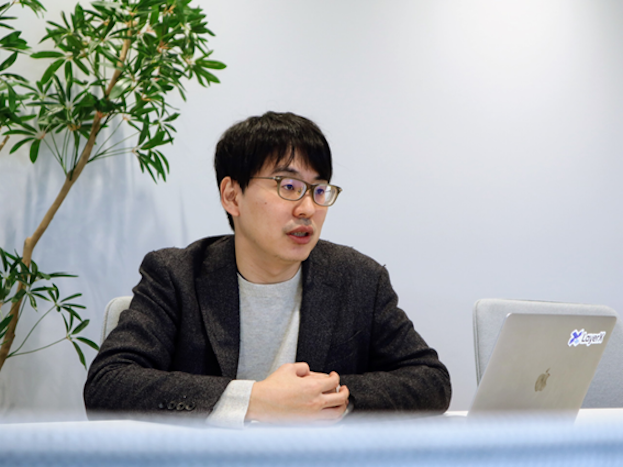
Growth equity’s value isn’t just about capital. Global investors like TCV possess insights and networks cultivated across their global portfolio companies. Several months after the investment, what specific changes have occurred at LayerX? We asked both parties about everything from management support during the acceleration phase to shifts in internal mindset.
——Beyond speed and capital, what do you expect from TCV’s global experience and network at LayerX?
Fukushima: What we value most is that TCV has a global portfolio and has already invested in companies in areas LayerX is providing solutions in. They offer a multifaceted perspective on how those companies were managed and insights into the areas we want to enter next.
They can validate our hypotheses with actual insights from their global network like, “This region is like this, that region is like that, and Japan is at a good timing here.”
And it’s not just information gathered online or through AI—they actually connect us with several executives so we can confirm things directly through conversation. I really feel the synergy from the information they possess.
——Michael, what kind of support does TCV provide to its portfolio companies?
Michael: We look to build close relationships with the CEOs and stakeholders of our portfolio companies. Typically, we participate on the board and actively support portfolio companies across a wide range of strategic topics, including talent, go-to-market, product, and capital markets including M&A and IPOs. We have an in-house value creation team and a deep network of operating partners and executive advisors, which TCV portfolio companies can access.
——It’s been a few months since the announcement of the investment. What changes have you seen at LayerX since TCV joined?
Fukushima: First, simply put, we’re now aggressively investing capital into business expansion and talent acquisition, really stepping on the gas. Regarding how we’re stepping on it, we discuss this not only with Mike but also with various board members. Their advice is incredibly precise. On the other hand, stepping on the gas does temporarily reduce investment efficiency in some areas. But we feel that we can make very rational judgments about the acceptable range for that deterioration, like, “We’re tracking these two metrics, and if this one is improving, then it’s okay, right?”
——Did TCV’s track record of knowing when to accelerate growth play a role in your choice?
Fukushima: Yes, that’s correct. I felt TCV possesses solid expertise in managing businesses under the premise of rapid growth—essentially, continuously pressing the accelerator—while keeping the organization and operations running without collapsing. In Japan, startups scaling that aggressively are still limited, but looking at TCV’s portfolio companies, they aren’t forcing growth. Instead, they grow while meticulously managing metrics and operations. I believe this requires a level of sophisticated management judgment beyond simply achieving profitability.
——Michael, what value does TCV focus on delivering to companies in the scaling phase?
Michael: One of our roles is to provide the experience of scaling software/AI companies to hundreds of millions in revenue. We provide insights into what that scale means from various perspectives like organizational design, go-to-market structure, and talent. Specifically, in the months since investment, we’ve introduced several executives from TCV’s network to get their input on key elements of product strategy. We’ve also facilitated introductions to potential partners and customers.
——Have you noticed any changes in the company’s atmosphere or team members’ mindset?
Fukushima: While the management team routinely researched overseas information, not all members did so—some did, others didn’t. Following TCV’s investment, they began proactively sharing proprietary research and curated insights on emerging trends and new product areas we are considering investing in.
What’s interesting is the amplifying effect: for example, mentioning TCV’s name, like “Mike said there’s this company…”, would get everyone’s attention and their eyes light up more than if I introduced about the company myself.
They also connected us with the CRO of a rapidly growing AI company using the Palantir model and arranged an interview. Gaining access to people we couldn’t reach on our own is a huge change.
——The ability for portfolio companies to support each other globally is indeed incredibly valuable.
Fukushima: This is a tremendous opportunity. If we were doing similar businesses in Japan, we’d be competitors, right? But globally, peers are completely separated by region and have different markets, so we can purely share best practices. Conversely, I believe we’re also providing value. For example, Japan is more advanced in the AI-BPO model, so we often get asked, “How do you do it?”
Future perspectives
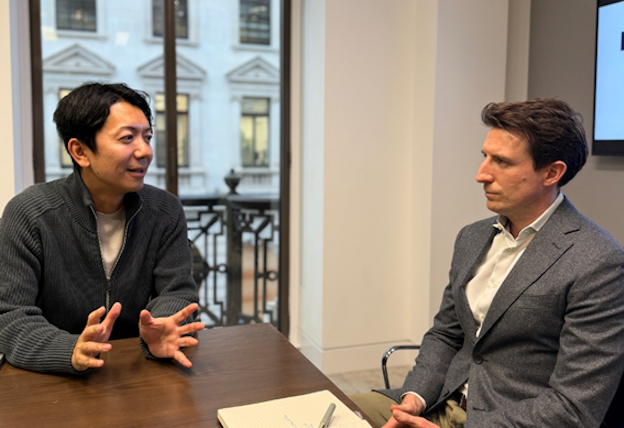
Japan’s startup ecosystem is at a turning point. Amid structural issues like reform of the Tokyo Stock Exchange’s Growth Market, and a shortage of growth equity, the entry of overseas investors could present a breakthrough. How does TCV view the Japanese market? And what responsibilities does LayerX, as a “first generation” company receiving investment from overseas investors, carry?
——Michael, I’d like to ask your perspective on Japan’s startup market and ecosystem. Compared to other markets, do you plan to increase your investment here going forward?
Michael: I believe there are several reasons why we didn’t see many large independent SaaS companies emerge in Japan during the SaaS wave since 2012. However, I sense the market environment has begun shifting over the past few years.
It’s interesting that Japan, despite being a very large and developed economy, lags years behind the US and Europe in terms of software penetration. While there are also some barriers to entry for international vendors, this creates a very interesting macro environment for investing. I expect to see larger domestic players emerge over the next few years, especially with the tailwind of AI which we believe will open enormous domestic TAMs, where perhaps in SaaS they were far smaller.
——Finally, I’d like to ask both of you. After this funding round, how do you plan to grow LayerX? Also, what impact do you think the entry of overseas investors at this Series B stage will have on Japan’s startup ecosystem?
Fukushima: For us personally, I think we simply have to deliver results now. Overseas investors have been entering Japan since the 2020s, and as one of the first companies they’ve invested in, I believe they’ll completely pull back from the Japanese market if we don’t show results. With geopolitical trends driving overseas capital toward Japan right now, we want to create a clear success story to avoid them concluding, “Well, it didn’t work out after all.”
You often hear about Japan’s issues with small IPOs or the lack of growth equity capital, right? If the entry of overseas investors starts to make those options work effectively, I think more startups will feel empowered to take on bigger challenges. We ourselves are benefiting from this environment, and LayerX must not disrupt that momentum. So, simply put, we have no choice but to deliver results.
——Michael, if you have a message for Japanese founders and the market, please share it.
Michael: To Japan’s startups, I’d say - be ambitious. Japan has a very strong legacy of building world-class businesses. The fact that there haven’t been many large-scale SaaS or AI success stories yet isn’t a problem. They will emerge. We believe that.
Global growth equity has officially arrived in Japan. The LayerX-TCV collaboration demonstrates a powerful synergy: the fusion of Japan's unique DNA and distinctive strengths with global capital and operating experience. Regarding the collaboration’s ultimate impact on Japan’s startup ecosystem—the answer will be written in the results LayerX delivers from here on out.
